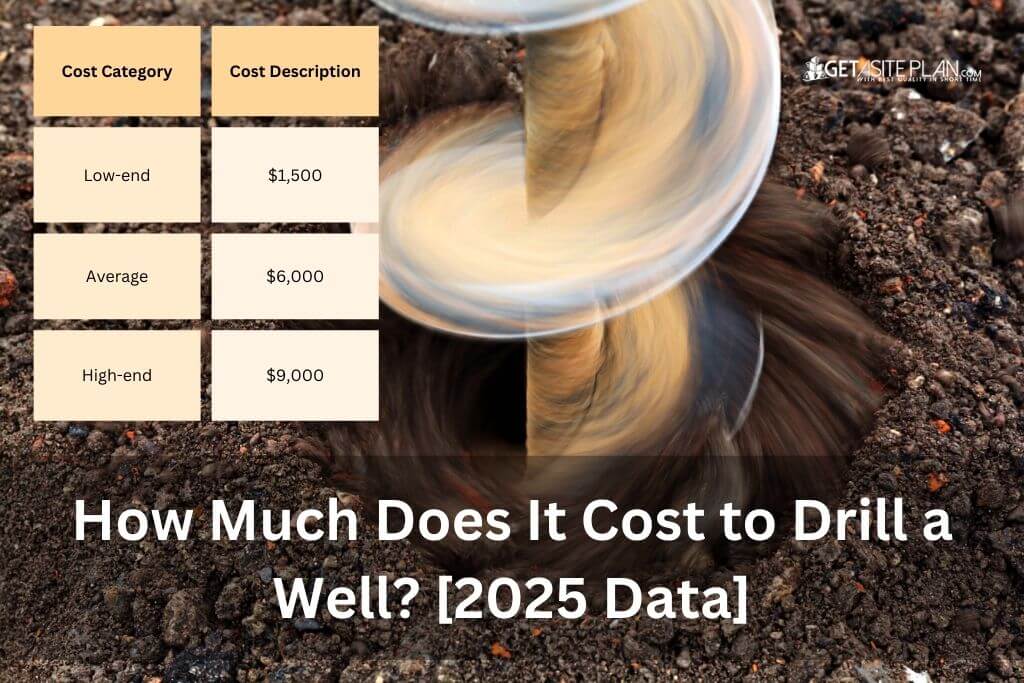
First, you have to understand that the ground doesn't care about your budget. The price depends entirely on where you live. If you’re in Florida, you might hit a wet sponge at 30 feet. Easy, cheap, and your wallet breathes a sigh of relief. But if you’re in the Rocky Mountains? You might be drilling through solid granite, and your drill bit will be crying harder than you at the end of Titanic. That drive can cost you $50 to $100 per foot, and you might go down 400 feet before you get a single gulp.
A shocking fact: some wells in drought-prone areas have to go 1,000 feet deep to find water. That’s like drilling a hole the length of three football fields stacked on end. Your water bill won’t exist—but your drill bill will be a small mortgage. Surprise: you’re now a landlord to a hole in the ground.
The Hidden Costs (Or: The Devil Wears a Permit)
So you think it’s just the drilling? Ha! You sweet summer child. You also need a permit, which can cost $100 to $500, depending on how much your local government likes paperwork. Then there’s the well casing—a steel or PVC pipe that keeps your hole from becoming a collapsed tragedy. That runs about $10 per foot. And don’t forget the pump. A basic pump is $300, but a good one that doesn’t die in three years? That’s $1,000 to $2,500.
Oh, and you’ll need a pressure tank so your shower doesn’t turn into a dribble. That’s another $400. Plus wiring, a control box, and a well cap so bugs don’t set up camp in your drinking water. By now, your well is more expensive than your cousin’s wedding. And guess what? That cousin is still going to ask you for a loan.
 Digging a Well - How To, Regulations and Permits - GetASitePlan