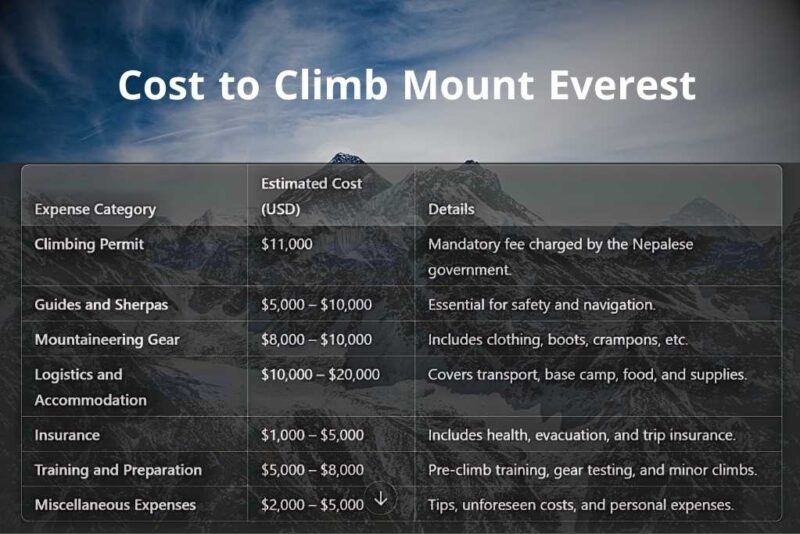
The permit is the first wallop to your wallet. The Nepalese government charges around £8,000 per person just for the right to step on the mountain. Think of it as the world’s most expensive theme park ticket—with no guarantee you’ll get on the ride.
Then comes the gear. You can’t rock up in your gym leggings and a woolly hat. A proper mountaineering suit costs around £2,000, and oxygen bottles add another £3,000 to £5,000. It’s basically the price of a winter wardrobe for a very, very cold fashion show.
Guides and sherpas are non-negotiable. A good expedition company will charge £15,000 to £40,000 for logistics, including your personal climbing sherpa. They carry the heavy loads, fix the ropes, and literally save lives. That’s where your money truly matters.
Little Extras That Make You Gasp (Even Before Altitude)
Flying to Kathmandu? Add £600. International flights? Another £800. Then there’s the “luxury” of a helicopter rescue insurance—around £200 for a policy that could save you a £15,000 evacuation bill.
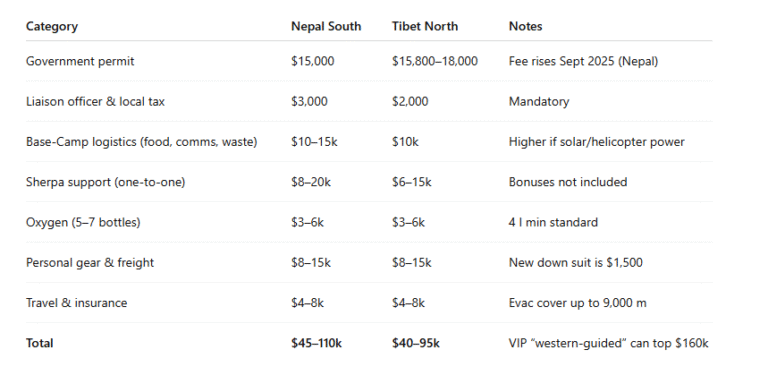 How Long Does It Take To Climb Mount Everest ? Timeline, Costs & More
Don’t forget the tips. It’s customary to tip your climbing crew a total of 10-15% of your expedition cost. So if you spent £40,000, budget another £4,000 to £6,000 for gratuities. That’s a lot of “thank yous.”
Even the smallest things add up. A single bottle of water at a high camp? £10. A hot shower in base camp? £5. You’ll spend more on dried noodles and toilet paper than you do on your monthly food shop back home.