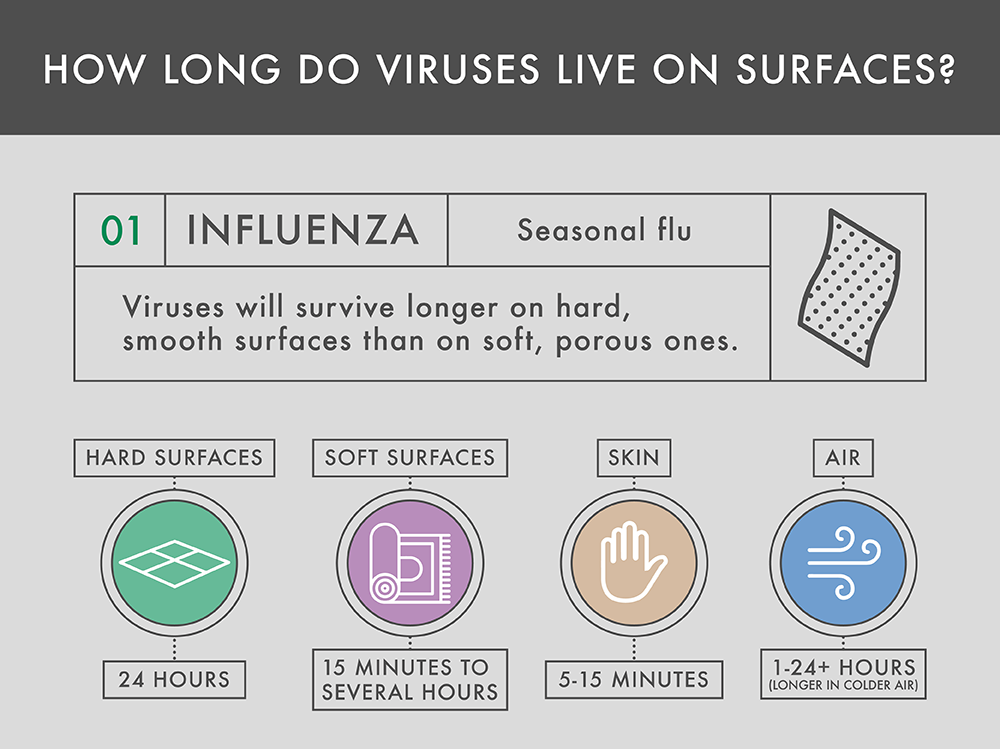
Influenza viruses are surprisingly fragile when it comes to porous surfaces. On soft, absorbent fabrics like cotton, fleece, or wool, the virus typically survives for 8 to 12 hours—sometimes up to 24 hours in the right conditions.
Compare that to hard, non-porous surfaces like stainless steel or plastic, where the flu can linger for 24 to 48 hours. Your couch is actually the safer spot for a viral timeout. It’s like the virus prefers a sleek penthouse over a warm, fuzzy bungalow.
Here’s the catch: the virus’s survival on fabric depends heavily on moisture, temperature, and fabric type. Dry air, warm rooms, and natural fibers all work against it. Think of your wool scarf as a gentle, uncooperative host.
What the research really says
A landmark 2011 study in the Journal of Virology found that flu viruses on soft surfaces like tissues and fabric became inactive within 15 minutes in some cases. But other studies show longer survival—especially if the fabric is synthetic or damp.
So, the real takeaway is: time is your best friend. Most flu viruses on fabric lose their infectious power within a day, especially in a typical dry home environment. Your laundry basket isn’t a biohazard zone.
For context, the flu virus is enveloped—meaning it has a fatty outer layer that dries out quickly on porous surfaces. Think of it like a fragile soap bubble that pops when exposed to air and absorbent fibers. Fabrics are essentially natural virus-killing sponges.