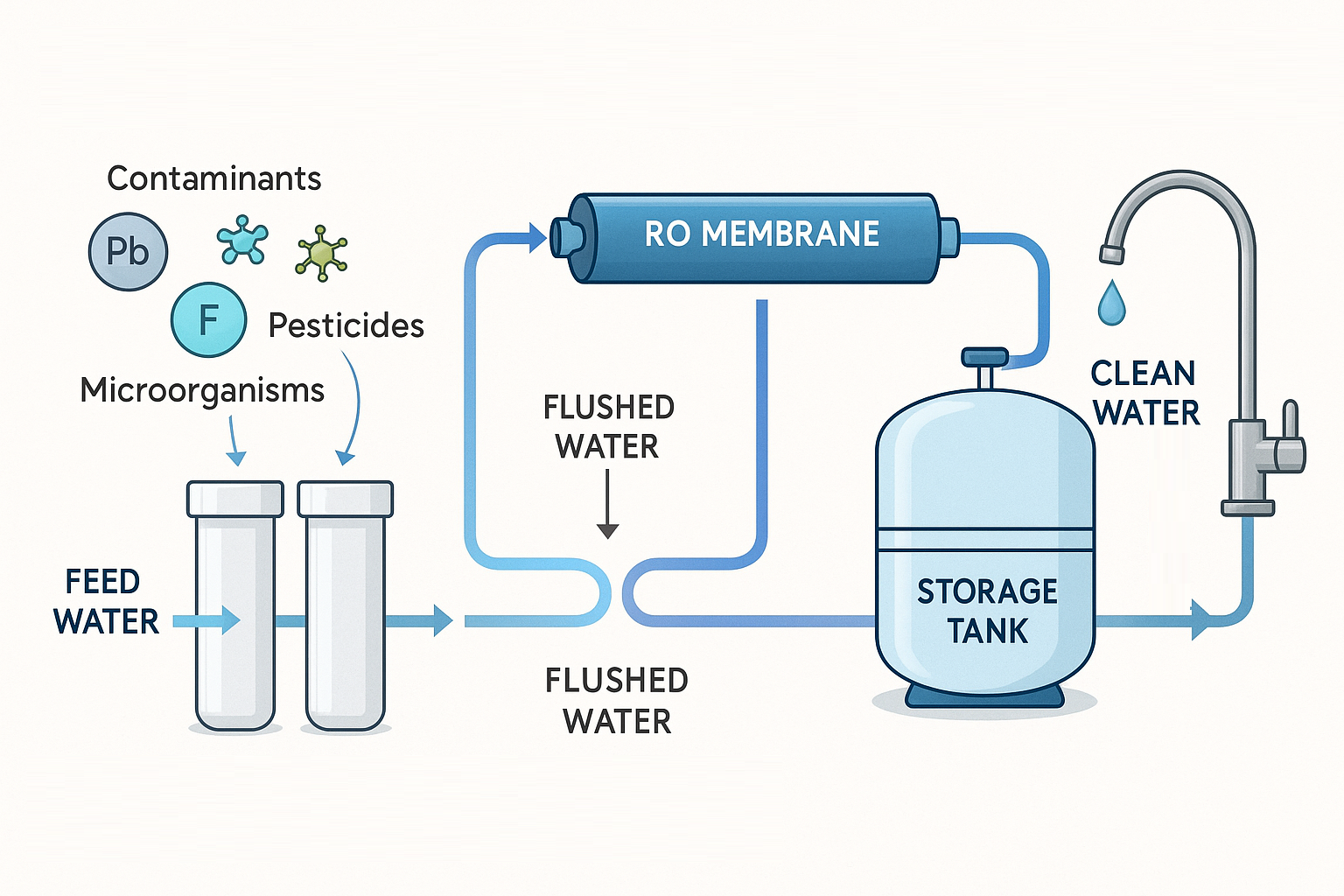
Reverse osmosis isn’t flawless. It does remove some beneficial minerals like calcium and magnesium, which is why some systems add them back in a final stage. Think of it as taking a really good bath—you scrub off the dirt, but then you might want a little lotion afterward.
 Reverse Osmosis (RO) | Water Filter Bali
Also, the system wastes a bit of water (about 3-4 gallons for every gallon of clean water). But newer models are getting much more efficient. And honestly, compared to the truckloads of water used to make a single bottle of soda, it’s a small price for purity.
Is It Right for Your Kitchen?
If you live in a city with decent tap water, you might not need it. But if you’re on well water, hate the taste of chlorine, or just want the crispi-tasting water for your iced tea, yes—it’s a game-changer. I’ve got a friend who bought a countertop RO system after her toddler refused to drink anything but “clear water” (read: no floaties). Now the whole family is hooked.
Installation can be a tiny project—under-sink models need a small hole for the faucet—but many are DIY-friendly. Or you can buy a countertop pitcher that does a similar job. Start small and see if you notice the difference. Spoiler: you will.
So next time you pour yourself a glass, think about that hardworking membrane, pressing on like a patient gardener, filtering out the noise. It’s not flashy, but it makes your daily sip a little bit magical. And that, my friend, is something worth raising a glass to.

