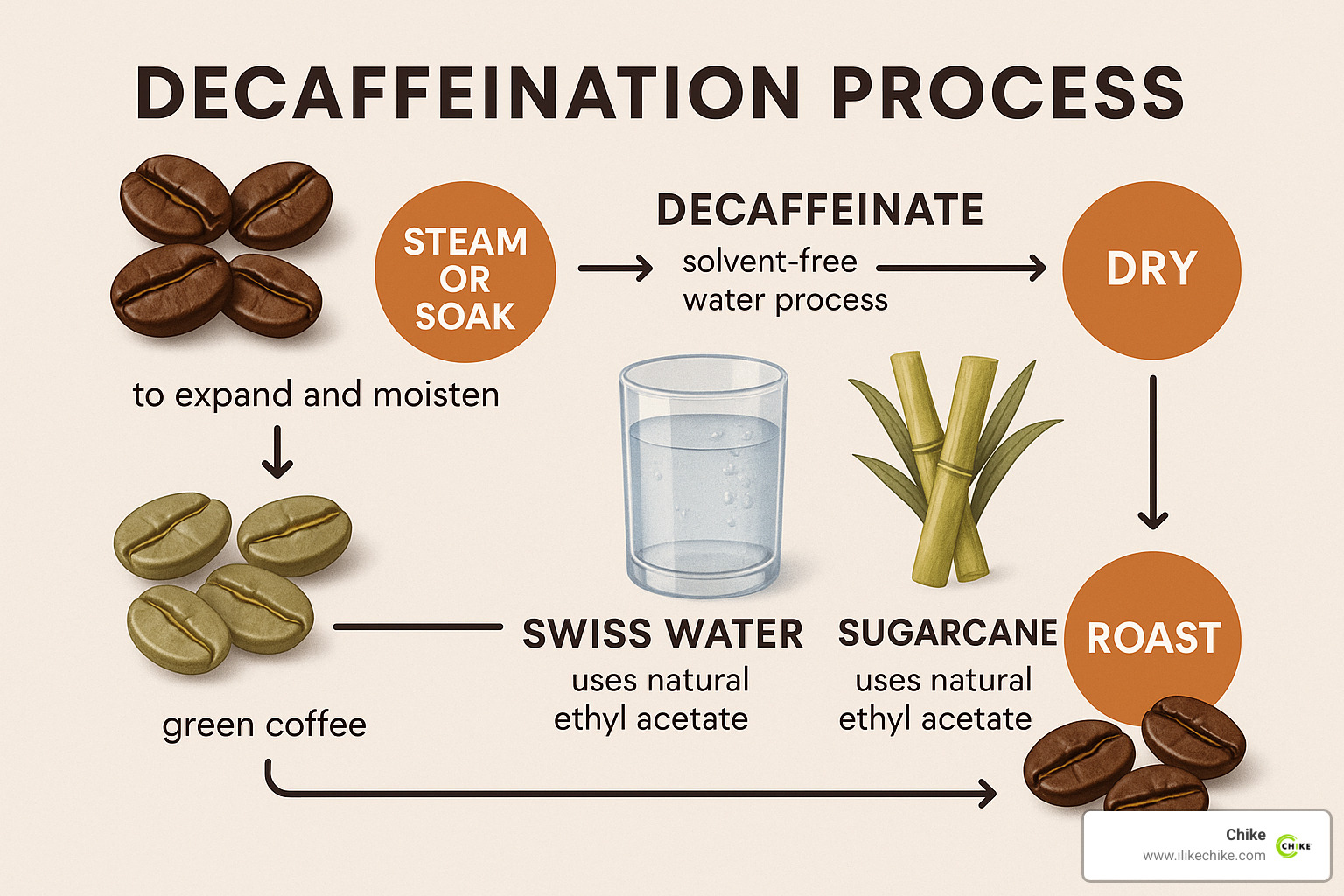
First, a little truth bomb: decaf coffee is not caffeine-free. It’s a tiny fib the coffee industry tells us, like “gluten-free” cookies that still taste like cardboard. By law, decaf must have at least 97% of its caffeine removed. That means one cup has about 2 to 5 milligrams of caffeine, compared to 95 in regular. Still, it’s enough to give a tiny jolt—so don’t blame me if you get a hint of energy.
But how do we get those 95 milligrams out? It’s not magic, and you won’t see tiny coffee beans running on a hamster wheel. The secret lies in chemistry and a bit of industrial wizardry. The goal is simple: strip the caffeine while keeping the coffee’s soul—its flavor, aroma, and rich brown goodness.
Method 1: The Swiss Water Process (The Clean Kid)
Picture this: a bunch of green coffee beans taking a spa day. In the Swiss Water Process, beans soak in hot water until their caffeine dissolves. Then the water (now filled with caffeine and flavor) passes through a charcoal filter that traps caffeine molecules. The flavor-rich water is then used to soak a new batch of beans, which lose their caffeine but keep the taste. It’s like a café latte for beans—minus the buzz.
This method is chemical-free and great for purists. But it’s pricey, so your fancy Swiss-process decaf might cost as much as a first date. At least your date won’t get the jitters.
Method 2: The Direct Solvent Method (The Science Nerd)
Now we’re getting a little mad-scientisty. Beans are steamed to open their pores, then rinsed with a solvent like ethyl acetate or methylene chloride. No, that’s not poison—it’s carefully regulated. The solvent grabs the caffeine and is then removed, along with the caffeine. The beans are steamed again to banish any leftover solvent. Sounds scary, but it’s safe—your morning decaf is cleaner than your ex’s room.
Ethyl acetate is even made from fruits like apples and bananas. So you’re basically drinking fruit-science coffee. Which is a fun fact to drop at brunch.
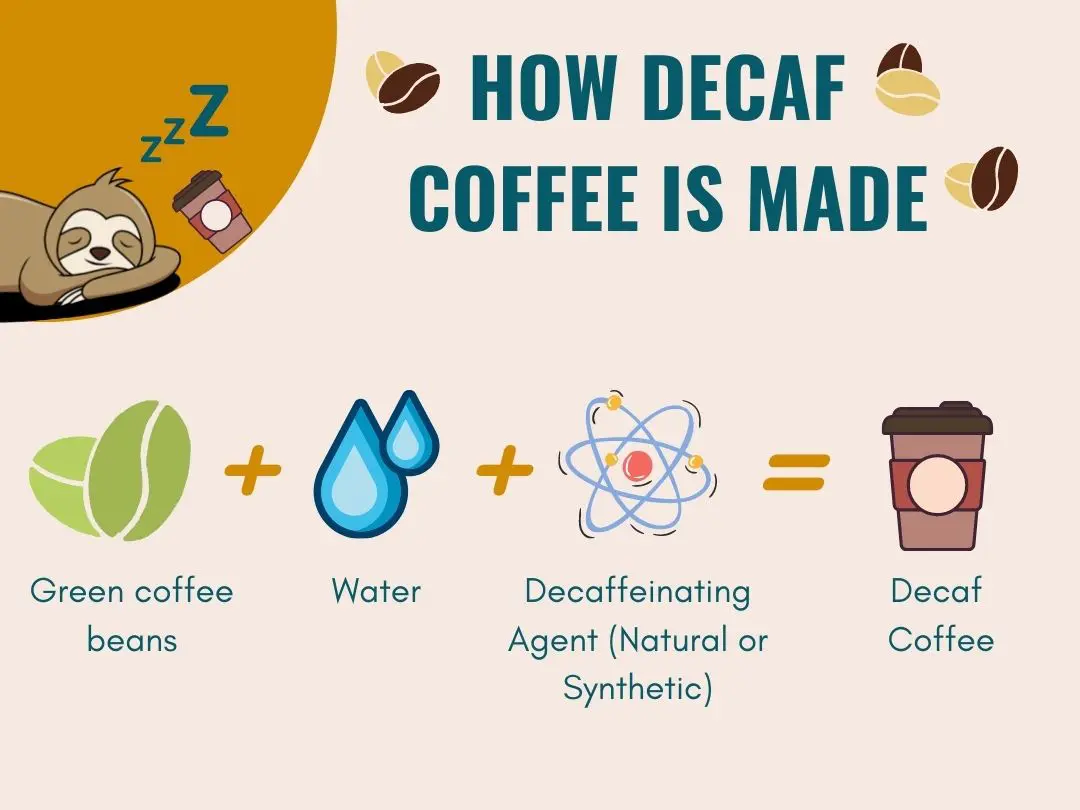 How To Make Coffee Decaffeinated
Method 3: The Indirect Solvent Method (The Sneaky Cousin)
This one is a two-step dance. Beans soak in hot water first (like the Swiss method), but then the water is separated and treated with a solvent. Only the caffeine-laden water gets the solvent treatment, not the beans themselves. The purified water goes back to the beans, reabsorbing flavor. It’s like a caffeine extraction heist—the solvent never touches the beans.
This method is popular because it’s efficient and preserves flavor. But don’t worry about your beans leading a double life; they’re just deeply relaxed afterward.
The CO₂ Method (The Fancy Space-Grade Option)
This one sounds like science fiction, but it’s real. Liquid carbon dioxide (yes, the same stuff in soda fizz) is pumped over the beans at high pressure. CO₂ acts like a selective magnet, grabbing caffeine but leaving flavor compounds alone. The pressure is released, and the CO₂ turns back to gas, carrying the caffeine away. It’s dry cleaning for beans.
This method is expensive, so it’s mostly used for high-end decaf. Also, it makes you sound extremely smart when you say “supercritical fluid extraction” at parties. Use it wisely.
 Is Decaf Coffee Healthy? A Science-Backed Look at Benefits, Risks