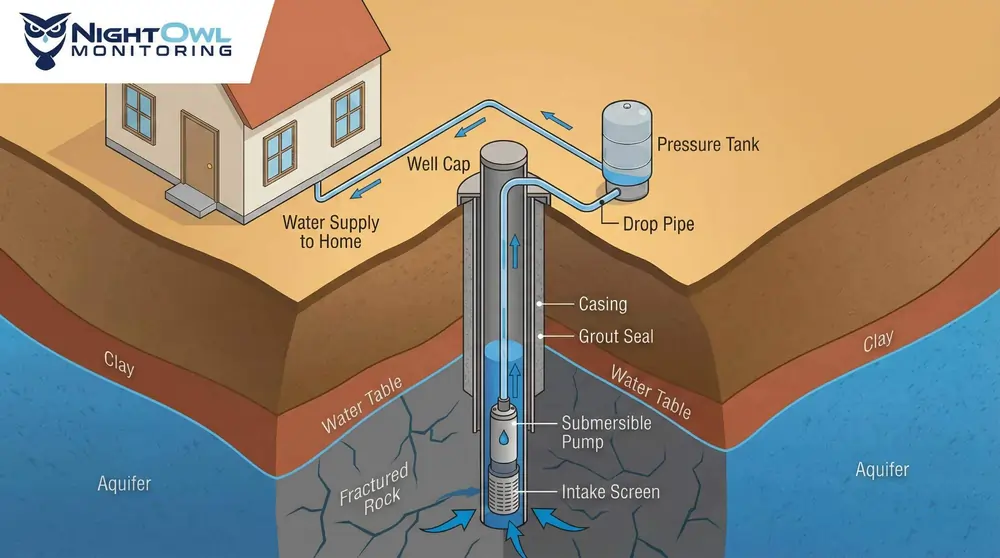
Think of the ground beneath your feet not as solid dirt, but as a giant, slightly damp sponge. When it rains, water doesn't just sit on top; it soaks down through sand, gravel, and cracks in the rock. This underground water is called groundwater, and it collects in a layer known as an aquifer.
An aquifer is just a fancy word for "a place underground where water hangs out." It can be a huge, sandy layer or a network of cracked rocks, all filled with water like a secret ocean. Pretty neat, right?
The top of this saturated zone is called the water table. Think of it as the surface of our hidden underground lake. The depth of this table can change depending on how much rain we’ve had, which is why wells sometimes go dry during a drought.
The Two Musketeers: Dug Wells vs. Drilled Wells
Back in the old days, people would dig a hole until they hit the water table, line it with bricks, and call it a day. These are dug wells, and they’re basically a big, wide hole in the ground. They’re great for history books, but not so great for modern life.
Today, we use drilled wells, which are way more high-tech. A giant drill rig bores a narrow, deep hole—sometimes hundreds of feet down—straight into the aquifer. It’s like poking a straw into a big, delicious juice box of water.
The hole is then lined with a tube called casing, usually made of steel or plastic. This casing keeps the hole from caving in and, more importantly, blocks out dirty surface water from seeping in. We want clean water, not muddy puddle juice, thanks very much.
The Magic That Brings Water to Your Sink
So, you have this tube sunk deep into the earth, all the way to the aquifer. But water isn't a fancy elevator; it won't just rise up on its own to greet you. That’s where our hero, the pump, comes in.
Most modern wells use a submersible pump that sits at the bottom of the well, completely underwater. When you turn on your tap, the pump kicks on and pushes the water up through a pipe to your house. It’s like a silent, robotic superhero working 24/7 in the dark.
 How Does a Well Work? | Angi
There’s also the older jet pump, which sits above ground and uses suction to pull the water up. Think of it like drinking a thick milkshake—it works great, but only if the well isn’t too deep. For deep wells, the submersible pump is the undisputed king.
The Secret Sauce: The Well Screen
Here’s a little secret that makes the whole thing possible: the bottom of the well casing isn't solid. It has a special section called a well screen, which is basically a filter with tiny slots or holes. Water flows in through these slots, but sand and gravel are kept out.
Without this screen, your water would come out looking like a muddy river. And nobody wants grit in their teeth while brushing. It’s a simple, brilliant piece of engineering that saves your plumbing from a nasty, gritty death.
Around the screen, they often pour a layer of gravel, called a gravel pack. This acts as an extra filter and helps water flow smoothly into the well. It’s the bouncer at the club, only letting the good stuff (pure H2O) through.
Pressure Tanks: Your Water’s Personal Butler
You might think the well pump runs every time you flush the toilet. If it did, it would burn out in a week. To prevent this, your well connects to a pressure tank, usually sitting in your basement or garage.
This tank stores a small reservoir of water under pressure. When you turn on a tap, the pressurized air in the tank pushes the water out, no pump required. The pump only turns on when the tank's pressure drops, refilling it like a gas station for your home.
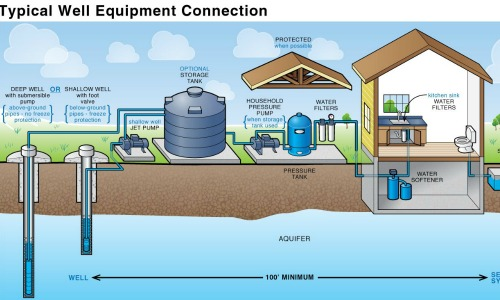 Home Water Well Diagram Denmark Water Monitoring Data | South Carolina
It’s like having a gentleman’s agreement: the pump does the hard work, but the tank handles the little stuff. This saves energy, extends the pump’s life, and gives you a steady flow without the "pump-on, pump-off" hiccup.
What About Contamination? The Paranoia Check
You might worry about what’s in that downward drippy water. Don’t panic! The casing is sealed at the top with a special cap to stop bugs, critters, and surface runoff from getting in. It’s a fortress down there.
Modern wells also often have a sanitary seal and a screened vent. This lets the system breathe without letting in dirt or mosquitoes. Your well water is actually often cleaner than surface water because the earth filters it naturally.
Still, it’s smart to get your water tested once a year for bacteria and minerals. It’s like a check-up for your drinking water. A little proactive love keeps the magic flowing.