
So, how do you eyeball a hurricane’s size before it reaches your shore? Look at the “spiral rain bands” on a live satellite loop. If those arms extend from the center like a giant pinwheel for hundreds of miles, you’re looking at a major system. The wider the pinwheel, the longer you have to feel the outer winds.
Pro tip: The size of the hurricane is often less important than its forward speed. A slow-moving, medium-sized storm (think Harvey) is far more dangerous for flooding than a fast-moving giant that zips past. Always check the “speed of movement” on the National Hurricane Center’s map.
And here’s a weird one: Hurricanes can actually shrink right before they intensify. That’s called an “eyewall replacement cycle.” The storm gets tighter, stronger, and smaller. Don’t be fooled by a smaller footprint; it might be a sleeping dragon about to exhale fire.
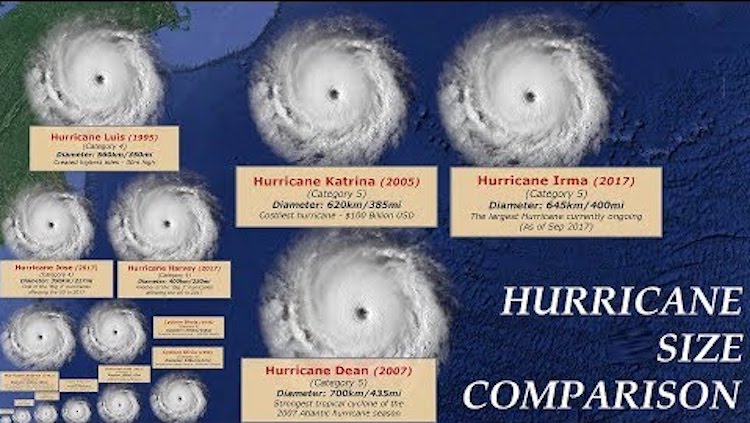 A Comparison of Hurricane Sizes Over the Years
The Human Element & The Silver Lining
There is a strange, addictive beauty to watching the spiral of a large hurricane. It’s terrifying, but it’s also a reminder that the Earth is alive—breathing with immense, planetary-scale energy. The same instability that creates these monsters also moves nutrients around the ocean and powers the global weather engine.
For the worried coastal resident, know this: your local building codes are calculated for extremes. Modern homes are designed to handle winds up to 150 mph in high-risk zones. The biggest danger isn’t the width of the storm but the water it pushes. During Sandy, 90% of the fatalities were from water, not wind.
Finally, a little perspective: The biggest hurricane ever recorded on Saturn is 10,000 miles wide. That makes Tip look like a dust bunny. As we learn to live on a warming planet, we are just passengers on a much larger system.