Nuclear Fusion Reactor Types
So, picture this: I’m at a tiny, dimly lit pub in Oxford, nursing a pint of something bitter, when a guy in a rumpled sweater starts ranting about the sun. “It’s just a big, a...
So, picture this: I’m at a tiny, dimly lit pub in Oxford, nursing a pint of something bitter, when a guy in a rumpled sweater starts ranting about the sun. “It’s just a big, angry hydrogen bomb,” he mutters, “and we’re too dumb to copy it.” He was talking about nuclear fusion, the holy grail of energy—and the way he said it, you’d think we were all toddlers trying to build a campfire with wet matches. That night, I dove into a rabbit hole of reactor types, and let me tell you, it’s less “mad scientist” and more “bickering engineers with very expensive toys.”
Here’s the deal: fusion is what powers every star, including our own. It’s when you smash two light atomic nuclei together, they fuse into a heavier one—and bam, you get a ridiculous amount of energy. No long-lived radioactive waste, no carbon emissions—just pure, starlight-level power. But getting Earth to play nice with that magic is like trying to hold a tornado in a teacup.
Right now, there are two main flavors of fusion reactors, and they’re locked in a nerdy grudge match. First up, the tokamak—the old guard, the tried-and-true design that’s been around since the 1950s. It’s a doughnut-shaped chamber (toroid if you’re fancy) that uses powerful magnetic fields to squeeze a plasma—superheated gas—into a spinning, hot ring. Think of it as a magnetic straitjacket for a mini-star.
The tokamak is the workhorse of fusion research. ITER, that massive international project in France, is building one the size of a cathedral. The plasma inside hits temperatures hotter than the core of the sun—like, 150 million degrees Celsius. Side note: if you ever forget your oven mitts, don’t stick your hand in a tokamak. Bad day.
But tokamaks have a dirty secret: they’re finicky as hell. The magnetic fields are unstable, the plasma can “disrupt” and just… quit. It’s like trying to keep a feral cat in a bathtub—inevitably, it scratches the walls and escapes. Engineers spend years tweaking the shape of the coils to stop the plasma from wobbling.
Then there’s the stellarator, the rebel cousin. Instead of a simple doughnut, it twists the plasma into a pretzel-shaped path. Imagine a tokamak, but someone got drunk at a design meeting and decided to reverse the magnetic field in some sections. The result? A naturally stable plasma that doesn’t need constant babysitting.
Stellarators are the champions of consistency. Germany’s Wendelstein 7-X runs for minutes—ages in fusion time—without the plasma throwing a tantrum. But they’re a nightmare to build. The magnetic coils are custom-bent into bizarre, artsy shapes, and each one costs more than my house. And my house has a loft.
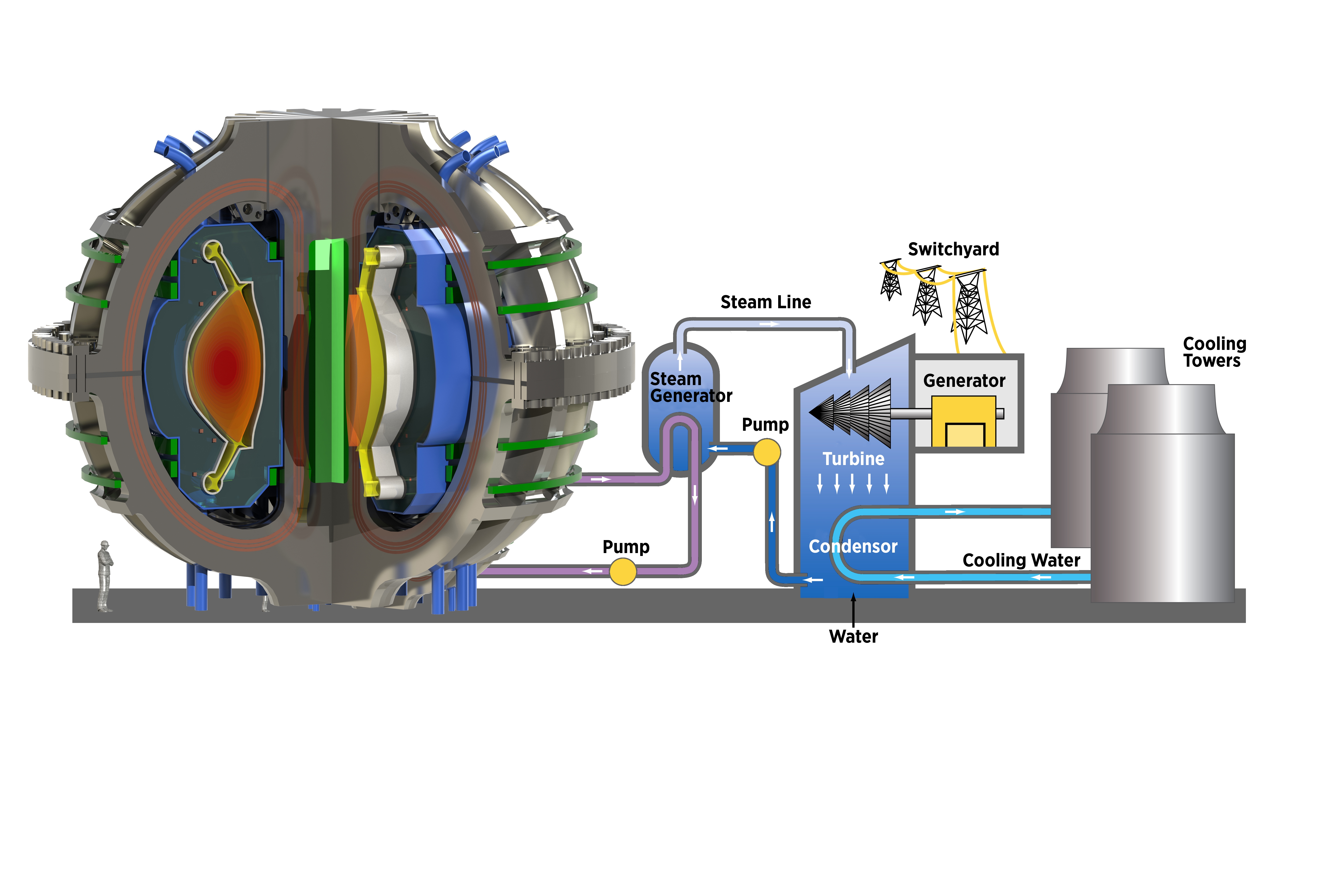 Nuclear Fusion Reactor Designs
Now, let’s not forget the underdogs. Inertial confinement fusion takes a different route: you zap a tiny pellet of fuel with lasers or ion beams. The outer layer explodes inward, crushing the core into fusion. It’s like trying to start a fire by punching it really, really hard. The National Ignition Facility in California just achieved a “net energy gain” this way, but it’s a one-shot deal—not a power plant.
There’s also magnetized target fusion, which is half tokamak, half inertial. You inject a ring of plasma and then squeeze it with a metal piston. Think of it as a cosmic accordion. It’s cheaper, smaller, and some startups—like General Fusion—are betting the farm on it. I’d joke about farm animals, but the science is actually solid.
So, which reactor type will win? Honestly, nobody knows. Tokamaks have decades of funding and a giant project, but stellarators are catching up in stability. Inertial fusion might leapfrog everyone if laser tech gets cheaper. And some rebel startups are trying wild concepts—like using liquid lithium walls or spinning the plasma into a donut with a smoke ring shape.
Here’s the irony: we’re all waiting for fusion to be “20 years away,” but it’s been 20 years away since the 1970s. That pub scientist was half-right—we’re not dumb, but we’ve been building prototypes instead of a real energy machine. Every tokamak, stellarator, and laser array is a step, not a leap.
 Nuclear Fusion Reactor Designs
What excites me most is the attitude shift. Private companies (Commonwealth Fusion, TAE, Helion) are now building smaller, faster devices. They don’t care about the “ideal” design—they just want to ship a working reactor before 2035. One company, Helion, claims their “field-reversed configuration” reactor could produce electricity directly, without boiling water. Boiling water is so 19th century, right?
If you want my money, I’d put it on the stellarator—or a hybrid of both. Why? Because nature loves stability, and a twisted pretzel seems more elegant than a caged doughnut. But I’m a writer, not a plasma physicist—so take that with a grain of salt.
In the end, the real story is human stubbornness. We refuse to let go of the idea of a sun in a box. Every time a plasma hole hits a wall, someone quiets their ego and tweaks the coils. We’ve gone from “maybe in 100 years” to “maybe in my lifetime.”
So next time you hear about a tokamak disruption or a stellarator milestone, smile. It means some very smart, very grumpy people are still wrestling with the sun. And honestly? I’d rather we kept wrestling than ever gave up. Just don’t ask me to lend you my oven mitts.