
Going to see this musical? Prepare for absolutely zero filters. The show earns its R-rating with explicit language and jokes about genital mutilation, AIDS, and the angel Moroni. This is not a Sunday school play. However, if you’re okay with that, you’re in for one of the sharpest comedy experiences of the decade.
Here are a few fun facts for your pre-show research: The musical was co-created by Trey Parker, Matt Stone, and Robert Lopez (who also wrote Frozen’s “Let It Go”). Yes, the same man who wrote that beautiful song also co-wrote a number called “Hasa Diga Eebowai.” That phrase, sung by the Ugandans, translates roughly to an invitation for God to perform an impossible physical act. It’s a direct parody of “Hakuna Matata.”
Another insider tip: Watch Elder Cunningham’s physical comedy closely. The actor often improvises lines and gestures. The role requires a puppeteer’s energy and a clown’s vulnerability. Also, listen for the sound of the audience gasping—it happens a lot. The show’s strength is that it never feels cruel; it’s irreverent with affection.
Cultural Anchors and Real-World Connections
The musical is a love letter to—and a gentle roast of—American optimism. It references everything from The Lion King to the actual Mormon missionary handbook. It also touches on a profound truth: religion is often about community, not doctrine. When Elder Cunningham makes up a story about Jesus fighting a giant space frog, the villagers aren’t converted by truth—they’re converted by connection.
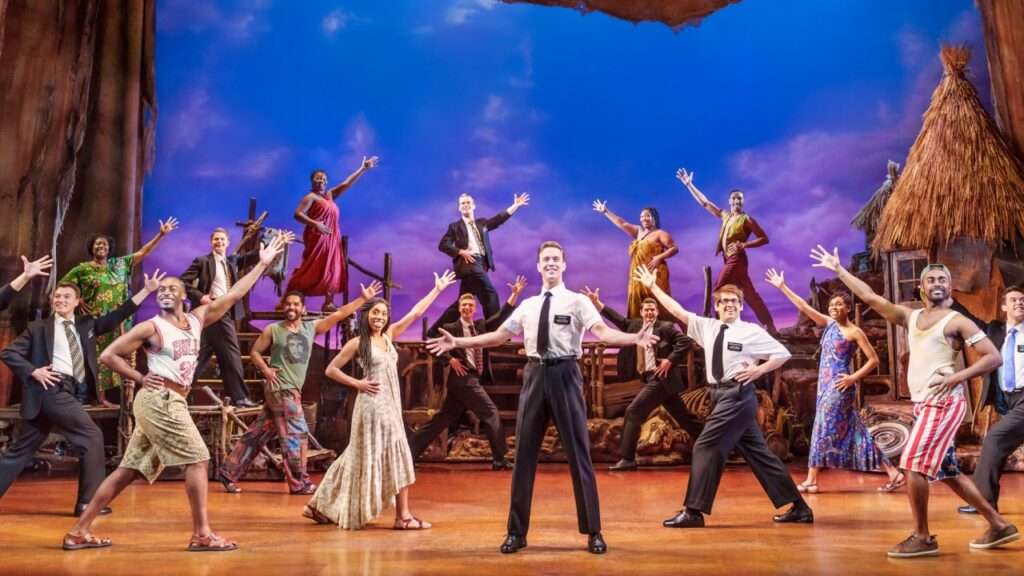 The Book of Mormon extends West End run to January 2026 | West End Theatre
There is a real-world parallel here. The LDS Church has since changed some of its missionary policies, including allowing local members to lead congregations. Coincidence? Probably not, but the musical’s influence is undeniable. It opened a dialogue about faith, privilege, and the danger of blind certainty. You don’t have to be religious to enjoy it; you just have to appreciate the awkwardness of a guy in a suit trying to explain baptism in a war zone.
Fun fact: The name “Orlando” appears so often in the show that the actors must sing it with a straight face. Also, the original Broadway production ran for over nine years, proving that audiences want to laugh at their own absurdities. It’s the second-highest-grossing musical of the 2010s, behind Hamilton.
A Short Reflection for Daily Life
The final message of The Book of Mormon is surprisingly gentle. It suggests that sometimes, the most truthful thing you can do is tell a story that helps someone feel less alone. Elder Cunningham’s lies are rooted in love. In our daily lives—whether we’re convincing a friend to try a new restaurant or inspiring a team at work—we often do the same. We bend the truth to create a shared moment of hope.
So, next time you’re stuck in a situation that feels impossible, remember Elder Cunningham. You don’t need to be perfect to make a difference. You just need to be present, be a little bit silly, and maybe throw in a reference to Star Wars. The universe might just sing back.

