Remember when GCSEs used the old A* to G system? Yeah, that got flushed down the revision timetable in 2017. Now it’s all about numbers: 9 to 1. A 9 is basically a superhero grade, and a 1 is… well, not great. But the pass mark? That’s the bit that makes parents cry into their tea.
Officially, a “standard pass” is a grade 4, and a “strong pass” is a grade 5. Yes, there are two passes. Because nothing says “clarity” like a binary pass system that still leaves everyone confused. If you get a 4, you’ve passed, but your school might still want you to retake it. If you get a 5, you can high-five your teachers.
But here’s the kicker: the pass mark isn’t a fixed number. It moves like a cat in a sunbeam. Each year, exam boards decide the boundary based on how hard the paper is and how well students perform. Your grade depends on other people’s mistakes. Irony, anyone?
The “Magical” Grade Boundary
Imagine a giant, invisible line drawn in the sand. If your mark lands just above it, you’re a hero. Below it? You’re suddenly researching “alternative career paths” at age sixteen. This line is called the grade boundary, and it’s calculated using statistics, past exams, and a pinch of voodoo.
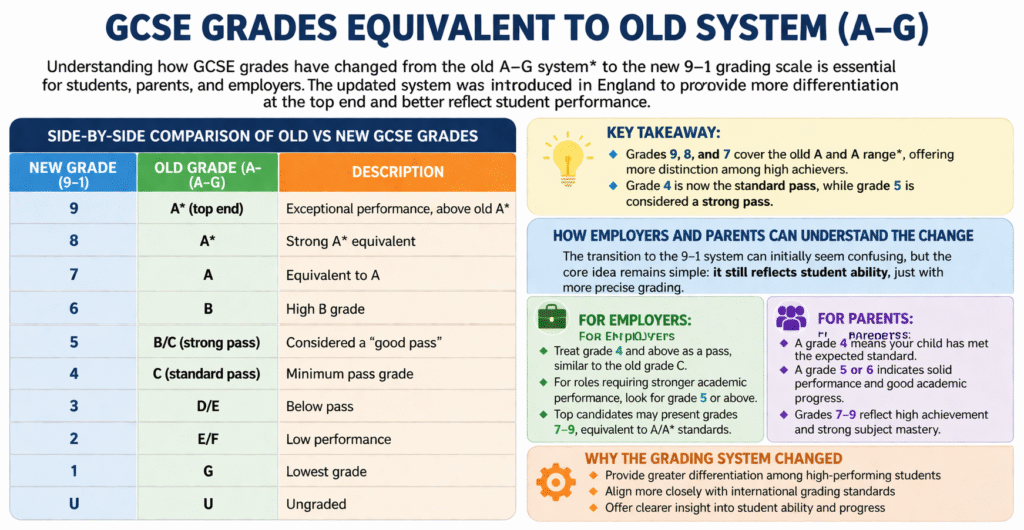 Understanding GCSE Grades
For example, a grade 4 in Maths might require 25% correct one year, but 35% the next. That’s right—you could answer one in four questions correctly and still pass. Don’t tell your parents I told you that. (They’ll ask why you didn’t aim for 26%.)
This is why you’ll hear teachers scream: “Every mark counts!” They’re not joking. One slip of the pen and you tumble from a 4 to a 3. One lucky guess and you’re suddenly eligible for college. It’s as fair as a rock-paper-scissors tournament in a hurricane.