If you make ice cubes from tap water, it’s usually fine because your municipal water supply is already treated with chlorine or other disinfectants. But if you freeze water from a muddy stream? You’re just making germ popsicles. Enjoy your dysentery on a stick!
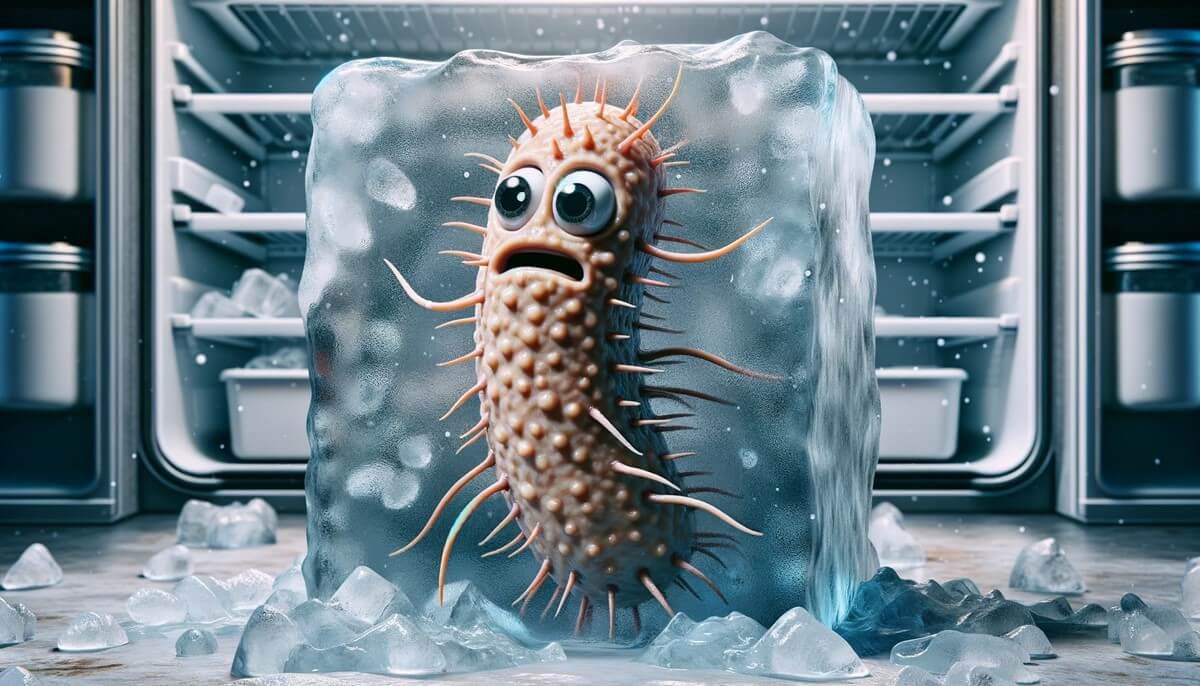
Home freezers are not sterile. They’re actually filled with bacteria like Pseudomonas, which can grow on ice at -10°F (-23°C). That weird smell in your freezer? That’s microbial flatulence. Seriously, it’s called “microbial volatile organic compounds.” You’re breathing in bacteria farts.
 冷凍と微生物の死滅 | 食品微生物学(検査と制御方法)|基礎と最新情報を解説|木村 凡
So next time someone tells you “freezing kills germs,” laugh in their face. Politely. Then explain that ice is just a germ refrigerator. The only thing freezing kills is your hope for a quick, clean solution.
The Verdict: Freeze with Caution
Here’s the takeaway: freezing water does not sanitize. It preserves. If you want to keep a sample of your cold forever, freeze it. But if you want to drink it safely, boil it first, or use a filter. Otherwise, you’re just making a germ smoothie.
And for the love of all that is holy, don’t eat snow off a parking lot. That yellow snow isn’t lemon-flavored. It’s a frozen biohazard, and freezing didn’t kill a single microscopic jerk in it.
So go ahead, enjoy your ice cubes—but know that you’re just giving those bacteria a cold nap. They’ll wake up in your stomach, ready to party. And trust me, you’re not inviting the right crowd.