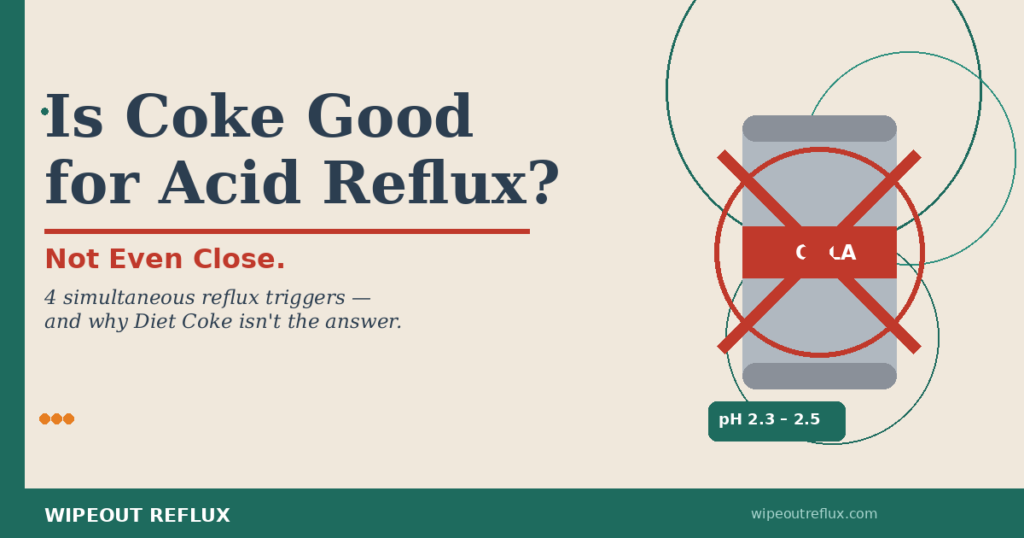
First off, Diet Coke is naturally acidic. Its pH hovers around 3.2, which is roughly as acidic as lemon juice. That’s a punch for your stomach, which likes to stay balanced around a neutral 7.
But here’s the cool part: your stomach is already a vat of hydrochloric acid—way stronger than any soda. The real question isn’t just about acidity; it’s about what happens after you swallow. Does your body freak out and send acid rocketing back up?
The Carbonation Factor: Bubbles of Trouble?
Think of those tiny, happy bubbles as little troublemakers. Carbon dioxide in Diet Coke turns into carbonic acid, which can stretch your stomach. Picture a balloon being overinflated—when it’s too full, the opening gets loose.
That looser valve—technically called the lower esophageal sphincter—is like a bouncer at a club. If it’s weak, acid sneaks past the velvet rope. Studies show carbonated drinks can indeed relax that bouncer. So, yes, the fizz itself might be a bigger trigger than the acid.

