
Does Candy Canes Have Gelatin
Let’s be honest: candy canes are the snacks of last resort. You find them at the bottom of your grandma’s purse in July, or hanging off the Christmas tree like edible tinsel t...
Let’s be honest: candy canes are the snacks of last resort. You find them at the bottom of your grandma’s purse in July, or hanging off the Christmas tree like edible tinsel that nobody actually wants to eat. But then, out of nowhere, a craving hits. You crack one open, and suddenly you’re six years old again, pretending you’re a peppermint-scented vampire. But then a thought creeps in: does this thing have gelatin in it? I mean, you don’t want to be munching on boiled horse hooves when you’re just trying to enjoy a holiday classic, right?
Here’s the good news, and I’ll shout it from the rooftops: most classic candy canes do not contain gelatin. Seriously, it’s like finding out your favorite uncle isn’t secretly a spy—just a relief. The standard red-and-white stick is basically just sugar, corn syrup, peppermint oil, and some food coloring. That’s it. No cow parts, no pig skin, no mysterious “gelatin” that sounds like it belongs in a chemistry lab. It’s basically a peppermint-flavored sugar sculpture that’s been bent into a hook by a machine named “Candy Bob.”
But wait—before you start doing a happy-dance in the candy aisle, let’s talk about the exceptions. Because of course there are exceptions. Some fancy or gourmet candy canes—like the ones with chewy centers, chocolate coatings, or “artisan” flavors like lavender-lavender-and-more-lavender—might sneak gelatin in as a stabilizer. It’s like that friend who says they’re “just coming for one drink” but ends up crashing on your couch for three days. Unexpected and a little annoying. Always check the ingredients list if the candy cane looks too fancy for its own good.
Why does this even matter? Because gelatin is a weird thing to put in a candy cane. Think about it: you break a candy cane, and it makes that satisfying snap sound—like a tiny twig in a cartoon. If there were gelatin in there, it would bend like a soggy noodle. You’d be trying to hang it on a tree, and it would just droop sadly. Gelatin is for gummy bears and Jell-O shots, not for holiday cheer. The whole point of a candy cane is its rigid, brittle personality. It’s the introvert of the candy world—hard on the outside, sweet on the inside, and not great at parties.
 The Surprising History of Candy Canes
I remember one Christmas, my cousin Dave tried to “improve” his candy cane by microwaving it for ten seconds. He thought it would make it “gooey like a marshmallow.” Big mistake. It melted into a sticky puddle that looked like a crime scene. The point is: candy canes are not supposed to be chewy. They are crisp, clean, and simple. Adding gelatin would be like putting a spoiler on a bicycle—pointless and a little embarrassing.
Now, for my vegan and vegetarian friends, here’s a pro tip: check if the candy cane uses confectioner’s glaze (which is sometimes made from shellac, i.e., bug secretions). Because nothing says “holiday spirit” like eating bug juice. But honestly, most standard brands like Brach’s, Bob’s, and even the generic store-brand tubes are gelatin-free. You can sleep easy knowing your festive snack is just sugar, air, and nostalgia.
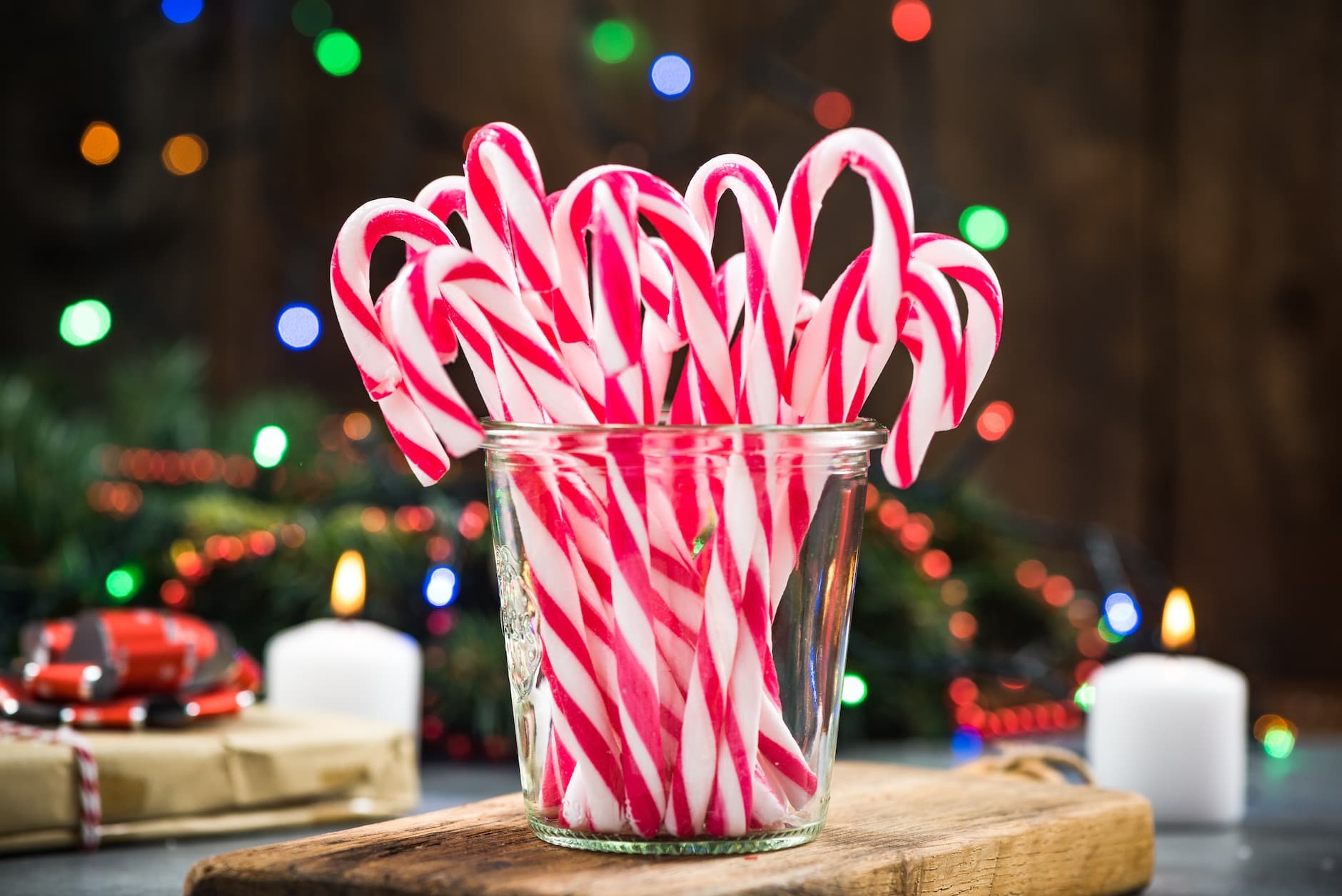 Candy Canes: History, Lore, Recipes, and More! - Farmers' Almanac
So, the next time you’re at a holiday party and someone offers you a candy cane, don’t freeze up like a deer in peppermint-scented headlights. Take it. Crack it. Enjoy it. You’re not eating a science experiment; you’re eating a piece of pre-industrial candy history. And if someone tries to hand you a “gourmet” candy cane with a filling that looks suspiciously like jam, just politely decline and whisper, “I only eat the ones that snap.” Trust me, it’s a good look.
At the end of the day, life is short. Eat the candy cane. Don’t worry about gelatin unless you’re a gummy bear, in which case, you have bigger problems. And if you’re still stressed? Just smash the candy cane into tiny pieces and sprinkle it on hot chocolate. Problem solved, joy added. That’s the holiday spirit, baby: crunchy, minty, and definitively gelatin-free.

