
When that “best by” date rolls around, nothing dramatic happens. No green fuzz. No terrifying explosion. American cheese doesn’t go bad in the same way milk or soft cheese does. Instead, it just gets… sad. It might dry out a bit at the edges, become slightly rubbery, or develop a faint, oily film. It’s like it’s giving up on life slowly, one slice at a time.
Here’s the kicker: if you keep American cheese sealed and refrigerated, it can last weeks, even months, past that date. I once found a pack from a Fourth of July barbecue in the back of my drawer in November. It smelled fine. It looked fine. I ate it on a grilled cheese. Did I feel like a rebel? Absolutely. Did I get sick? Not even a little. Just don’t push your luck to the point where it starts sweating real liquid.
How to Tell If It’s Actually Bad
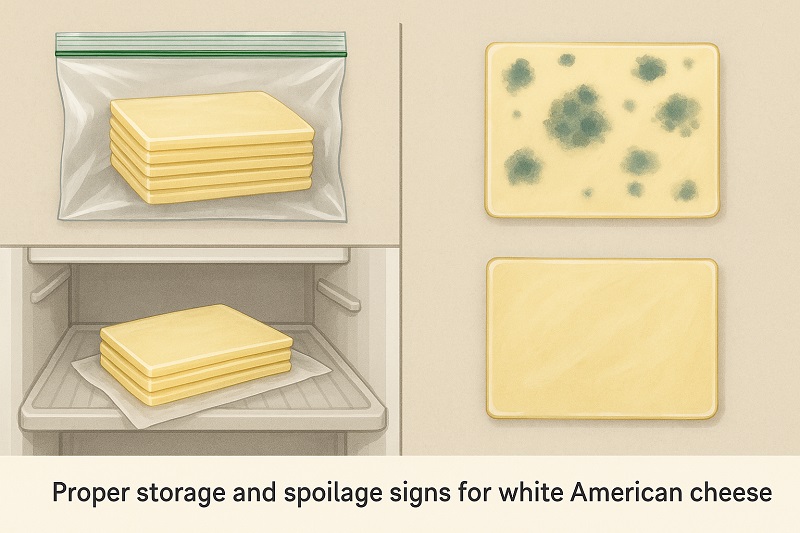
Use your brain and your nose, not just the date. If the slices have turned slime city, or if they smell sour like a gym sock that went on vacation, toss them. Another red flag is if you see actual mold. Yes, it can happen—but it’s rare. American cheese is like that friend who says “I’m fine” when they’re clearly not; it takes a lot to make it truly bad.
Also, check the texture. If the slices are fused together into one giant, inseparable cheese blob, you’ve got a mystery block. You can still eat it, but you’ll be wrestling with it like a tiny, cheesy sumo wrestler. Usually, it’s fine—just peel them apart and pretend you’re an archaeologist uncovering plasticky fossils.
 White American Cheese: Healthy or Just Processed Comfort Food? - The

