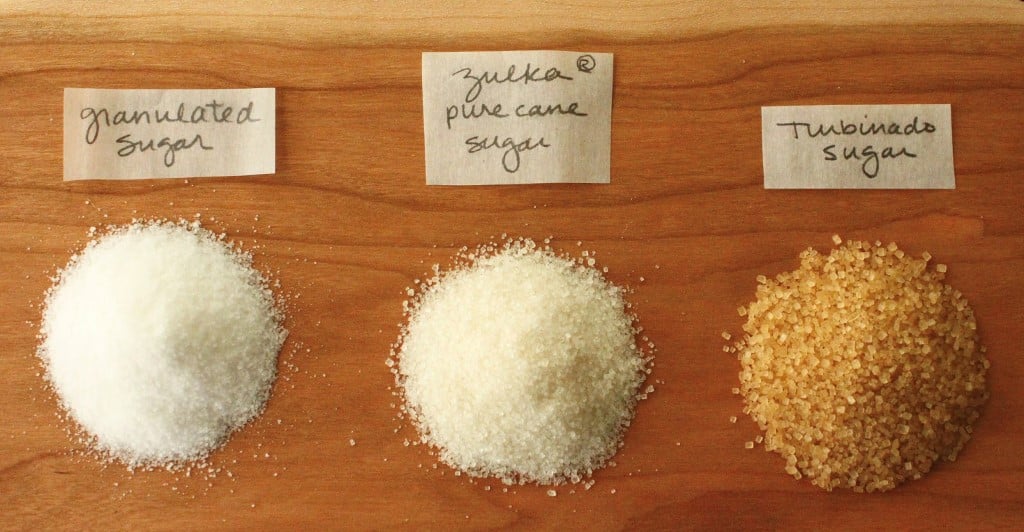
Let’s start with the guy you probably know: Granulated sugar. This is your standard, white, table sugar. It’s been refined to remove all the molasses, leaving behind pure, sweet sucrose crystals.
On the other side of the ring, we have Raw sugar. Think of it as granulated sugar’s slightly edgy, unpolished cousin. It’s made from the same sugarcane juice, but it goes through less processing, so it retains some of that natural molasses.
This leftover molasses isn’t just for color—it brings a tiny flavor profile you don’t get from white sugar. We’re talking subtle hints of caramel or toffee, though it’s pretty mild.
Size, Color, and Crunch (The Obvious Stuff)
If you put them side by side, the difference is almost funny. Granulated sugar looks like tiny, uniform grains of white sand. Raw sugar looks like amber-colored gravel. Seriously, the crystals are much larger and have a golden-brown tint.
That texture is a big deal. Because raw sugar crystals are bigger and coarser, they don’t dissolve as easily. This is why my cookies were a disaster. They need heat and liquid to fully melt, while granulated sugar just quietly vanishes into your batter.
So, when you sprinkle raw sugar on top of muffins or creme brûlée, that’s genius. You get a lovely, audible crunch. But trying to cream it with butter for a cake? You’re going to have a bad time.