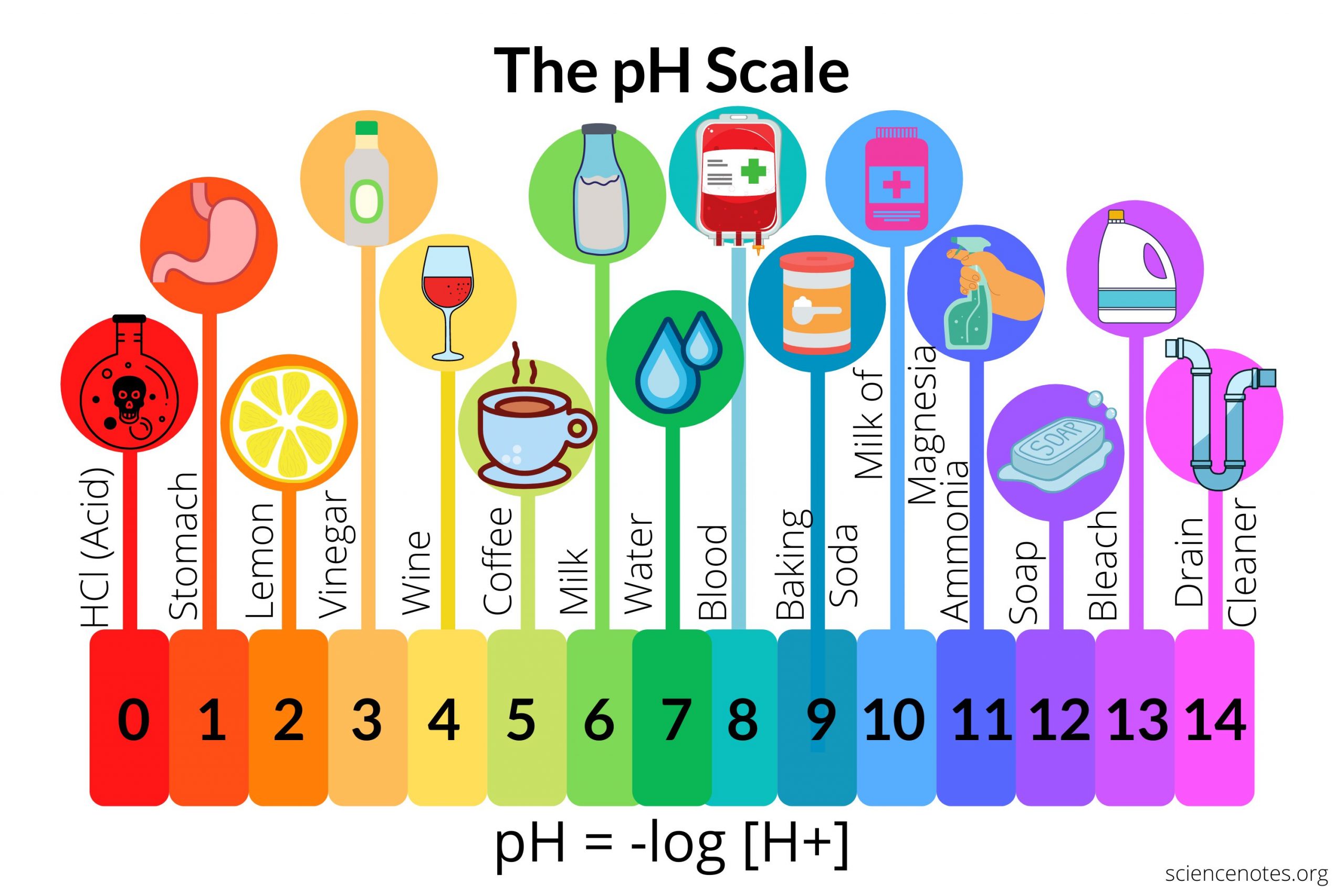
At its heart, pH is measuring one specific, tiny little ninja: the hydrogen ion. Think of it as the ultimate party crasher in a glass of water. These little H+ guys are ridiculously reactive—they’ll bond with anything, which is why pure water is so boring and stable.
Imagine a swimming pool full of people. A high pH means there are very few energetic, grabby hydrogen ions—it’s a calm, floaty pool. A low pH means the pool is packed with those grabby little ions, turning your relaxing dip into a mosh pit of chemical chaos. That’s why strong acids can burn your skin; it’s a hydrogen ion rave.
The “Power of Hydrogen” Isn’t Just a Cool Name
The letters pH literally stand for “potential of Hydrogen,” or potentia Hydrogenii if you want to sound fancy at parties. It’s a scale from 0 to 14, but don’t let the math scare you. It’s a logarithmic scale, which means every single number jump is a tenfold change. Going from pH 7 to pH 6 isn’t a little shift; it’s ten times more acidic.
To put that in perspective: lemon juice (pH ~2) is about 100,000 times more acidic than black coffee (pH ~5). That’s the difference between a mild morning wake-up and a face-melting zit treatment. Your stomach acid? It clocks in around pH 1.5. That’s basically industrial-strength battery acid, which explains why you shouldn’t eat a spoonful of it—your body made it to dissolve rocks (and lunch).

