
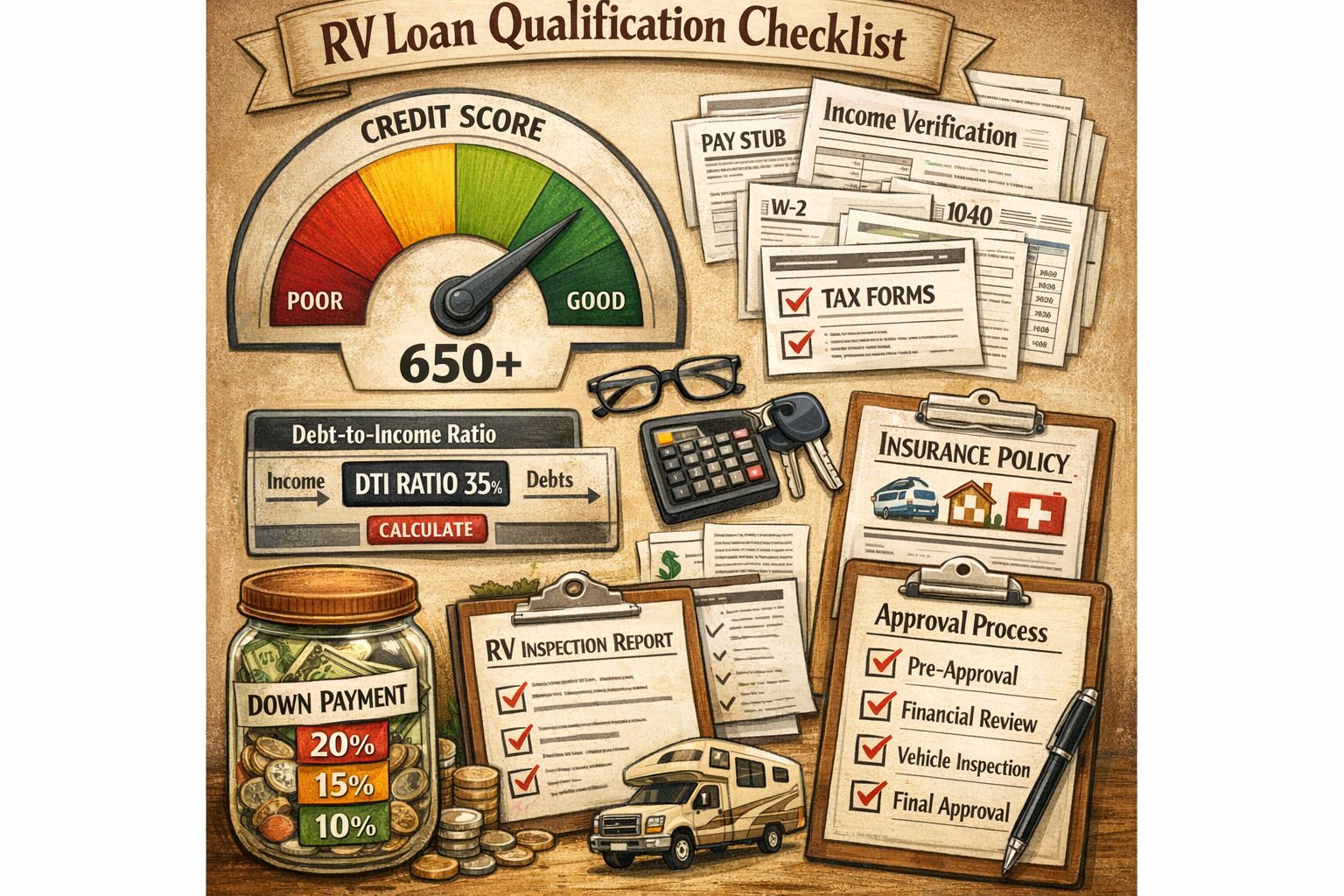
Think of your credit score as the price tag on your dream. A higher score means you get a lower interest rate. That could save you thousands of dollars over the life of the loan. Thousands of dollars that could instead buy you a lot of campfire s’mores and national park passes.
On the flip side, a lower score means the bank sees you as riskier. They’ll charge you more to borrow their money, just to cover their own backs. It’s not personal; it’s just math with a dash of caution.
 Can You Get a Mortgage on an RV? Complete 2026 Financing Gu
The Secret Sauce: What Lenders Actually Look At
It’s not just your score. Lenders are like curious detectives. They want to see your debt-to-income ratio (how much you owe vs. how much you earn). They also check how long you’ve been working at your job.
And don’t forget the down payment. For a new RV, expect to put down around 10% to 20%. For a used one, sometimes 10% will do. That down payment is like a friendly handshake that says, “I’m serious about this.”

