
Did you know fresh pasta actually shrinks slightly when you cook it? That thin fettuccine? It swells up and gets thicker. Texture magic.
Also, the water for fresh pasta should be less salty than for dried pasta. About 1 tablespoon per gallon versus 2. Why? Because fresh pasta absorbs salt faster. You don’t need a salt lick.
And here’s a weird one: the shape matters. Ravioli cooks in 2-3 minutes. Tagliatelle in 2-4. Pappardelle (the wide ribbons) might need a full 4 minutes. But nobody times pappardelle. It’s chaos.
Chaos we love.
The Emotional Stakes (Yes, Really)
Cooking fresh pasta is intimate. You made it (or bought it fresh). You’ve invested.
You stand over the pot, fork in hand, like a nervous parent at a toddler’s first recital. Every second counts.
One minute too long, and you’ve ruined your $10 fresh pasta from that fancy Italian shop. Or worse—the batch you rolled by hand for an hour.
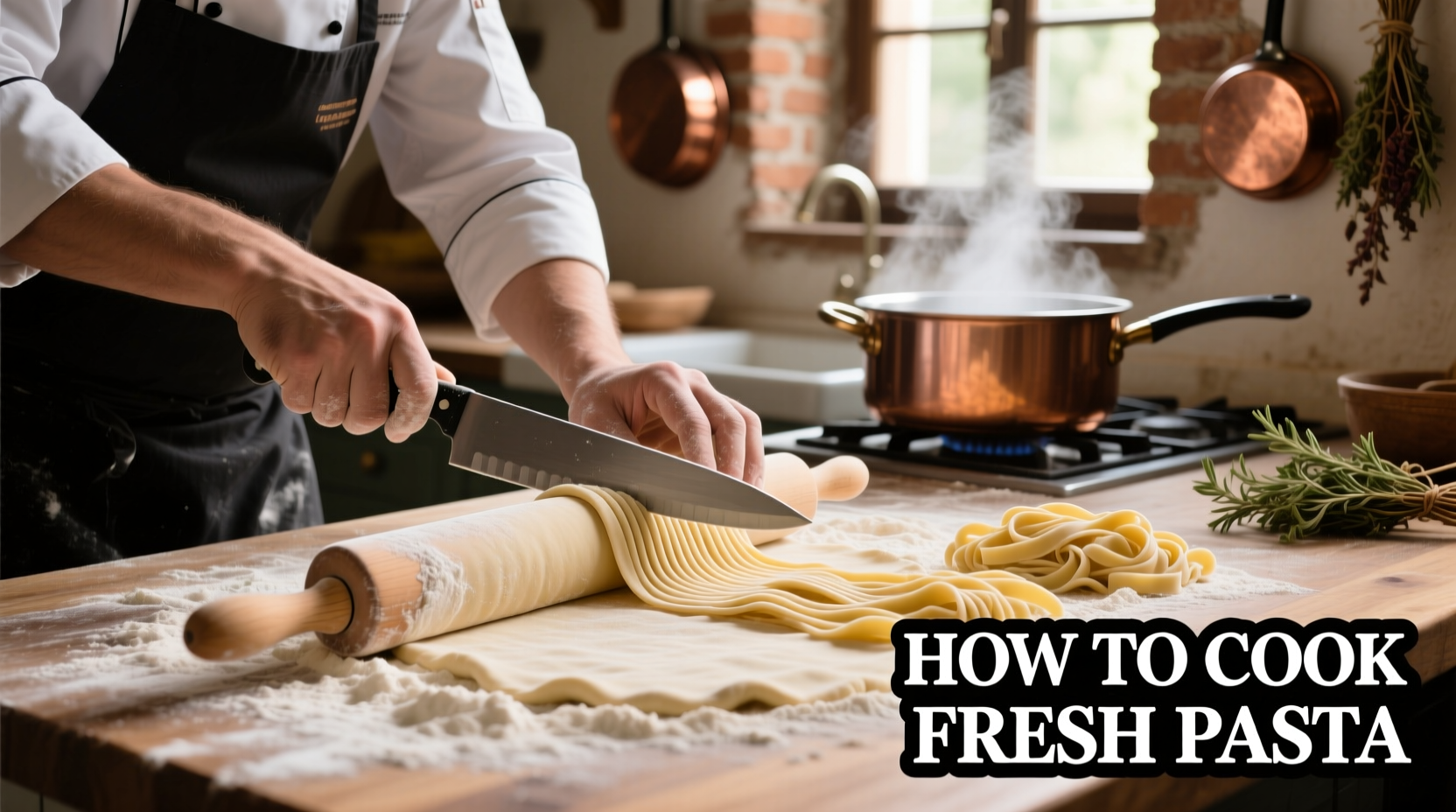 How to Cook Fresh Pasta: Perfect Results Every Time
It’s stressful. But it’s exhilarating. It’s the only time in the kitchen where you feel like a time traveler.
You finish the dish. You plate it. You sigh. You took a risk, and you won. Or you ate a clump of sadness. Either way, you learned.

