At its core, a proper Stollen is a yeast-risen bread dough packed with rum-soaked raisins, almonds, and candied citrus peel. The magic ingredient? Quark, a fresh cheese that keeps the crumb impossibly moist and tender. It’s not sweet like a typical cake; the flavor comes from a subtle dance of cardamom, nutmeg, and vanilla.
A fun fact: Germans often hide a tiny marzipan log in the center of the Stollen—a sweet, almondy surprise. When you slice it, finding the marzipan feels like a little gift, a tradition that turns dessert into a treasure hunt. And don’t even think about skipping the final dusting: a thick blanket of powdered sugar is not decoration; it’s a preservative layer meant to keep the cake fresh for weeks.
The Waiting Game Is the Secret
Here’s the thing about German Christmas cake: you literally cannot rush it. Bakers recommend making your Stollen at least three to four weeks before Christmas and letting it “ripen” in a cool, dark place. Wrapped in foil and stored in a tin, the cake matures as the alcohol and spices meld, turning from a dry loaf into a moist, aromatic wonder.
This waiting period is called durchziehen—to pull through or mature. In a world of instant gratification, making Stollen is a radical act of patience. It teaches you that some of the best things in life take time, just like friendships or a good holiday mood.
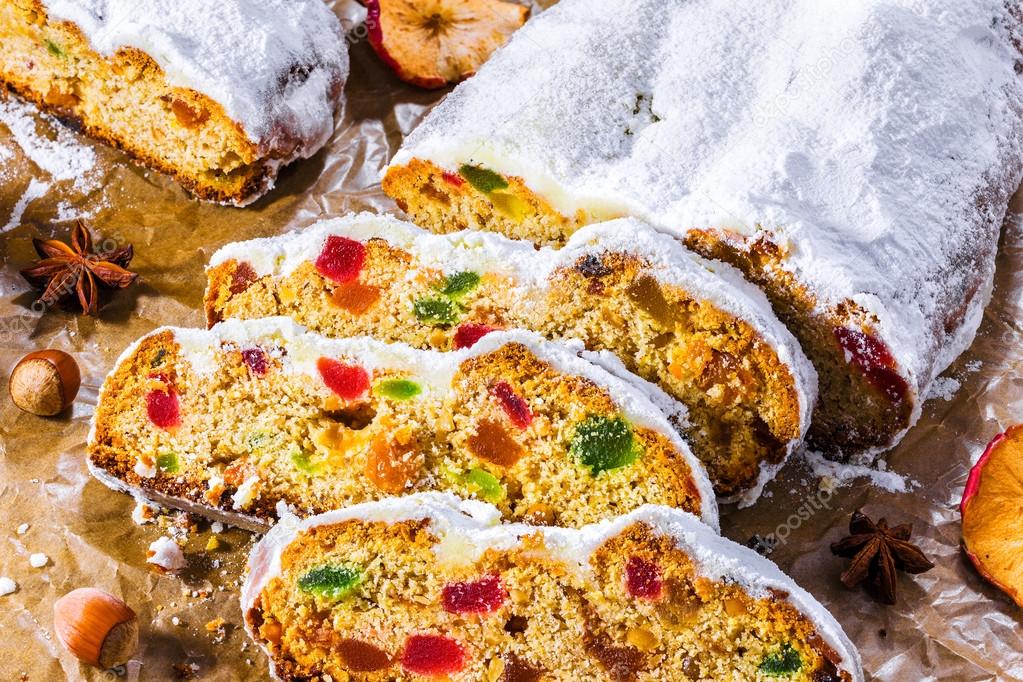 German tradition: Christmas Stollen