The real villain here is the lithium-ion battery. Yes, the very thing that keeps your laptop alive is also the reason airlines treat it like a tiny, explosive gremlin. These batteries can overheat, catch fire, or—in extreme cases—explode if damaged or crushed.
Imagine your checked bag getting tossed around like a rag doll (because it does). A hard knock could puncture the battery, and then you’ve got a smoldering fire in the cargo hold. And guess what? There’s no flight attendant down there with a fire extinguisher. That’s why the FAA and IATA say: laptops with lithium batteries must go in carry-on luggage.
But wait—there’s a twist. Smaller devices like phones and tablets are usually okay in checked bags if they’re turned off and protected. But a full-size laptop? That’s a “strongly discouraged” situation. Airlines aren’t going to tackle you for doing it, but they will not be happy if your bag starts smoking.
Exceptions That Make You Go "Huh?"
Of course, there are always loopholes, because air travel hates simplicity. Some airlines allow laptops in checked baggage if the battery is removed and carried in your hand luggage. But most modern laptops have built-in batteries that you can’t just pop out like a AA battery. So unless you own a ten-year-old brick of a machine, this option is dead in the water.
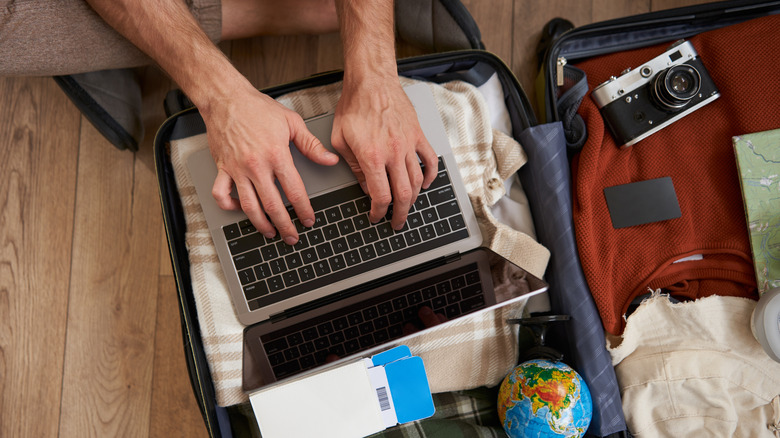 Can You Put A Laptop In Your Checked Luggage?
Another exception: checked bags that are “personal electronic devices”—like a laptop you’re shipping as cargo. But that usually requires special labeling and a declaration. You are not shipping cargo; you’re just trying to avoid carrying a bag. Sorry, no cheat code here.
And here’s a fun irony: some countries, like China and certain Middle Eastern nations, actually ban laptops in carry-on for specific flights (due to security concerns). So then you are forced to check them. But that’s a rare, government-level exception, not a travel hack.