
Even with the best softener, you must pump your septic tank every 3-5 years. I know, I know. It’s not fun. But the softener adds extra water. Extra water moves more solids into the tank. You need the pros to suck that out.
Installing a separate cold water line that bypasses the softener is brilliant. Your toilets and garden don’t need soft water. They only add volume to the septic tank. Keep it raw and unsoftened for those.
Also, don’t use resin cleaners or harsh chemical additives in your softener. Those are bacteria-killers. Just use clean salt and let the machine do its thing. Your septic doesn’t want a chemical bath.
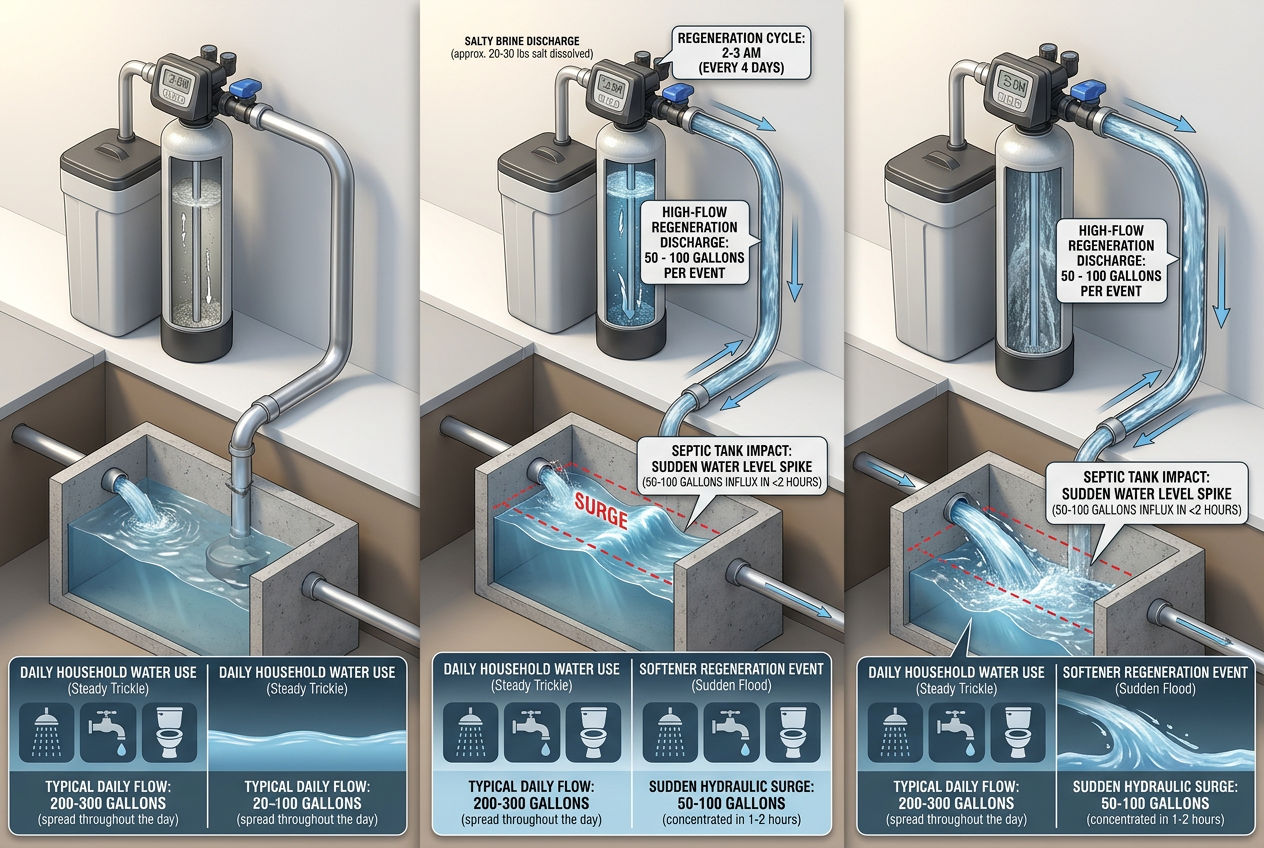 Water Softener Septic System: Safe? (2026)
What About the “Salt-Free” Myth?
You’ll see gadgets that claim to be “salt-free water softeners.” Most are actually water conditioners. They don’t remove hardness; they just change the crystal structure so it doesn’t stick. They’re great for pipes, but they don’t reduce bacteria-harming salt.
If you have moderate hard water and are terrified of salt, a conditioner is a fair option. But if your water is rock-hard (calcium >10 grains per gallon), you still need a real softener. Just a septic-safe one.
Let’s recap like we’re finishing our second cup of coffee. Buy a meter-controlled, high-efficiency softener with low brine usage. The WaterBoss Pro 22 is the go-to for most septic owners. The Fleck is for nerdy DIY types. The NuvoH2O is for the salt-averse.
Your septic system is not a science experiment. It’s a grumpy old creature that just wants peace, quiet, and not too much salt. Give it that, and you’ll have soft water and a happy backyard. Win-win. Now go make that tank proud.

