Not all crust is created equal. We have continental crust (old, thick, and buoyant like a cork) and oceanic crust (young, dense, and heavy like a brick). Continental crust is mostly granite and averages about 2.7 grams per cubic centimeter, while oceanic crust is basalt, heavier at 3.0 grams per cubic centimeter. This difference in weight is the key to plate tectonics—the heavy oceanic crust sinks beneath the lighter continental crust when they collide, creating deep ocean trenches and volcanic arcs.
Think of it this way: continental crust is that laid-back friend who floats calmly in the pool, while oceanic crust is the one who dives and sinks to the bottom. That sinking action is what powers subduction zones—the engine room of earthquakes and tsunamis. The oceanic crust is also younger, rarely older than 200 million years, because it’s constantly recycled back into the mantle. Meanwhile, some continental crust is over 4 billion years old—a true fossil record of our planet’s early days.
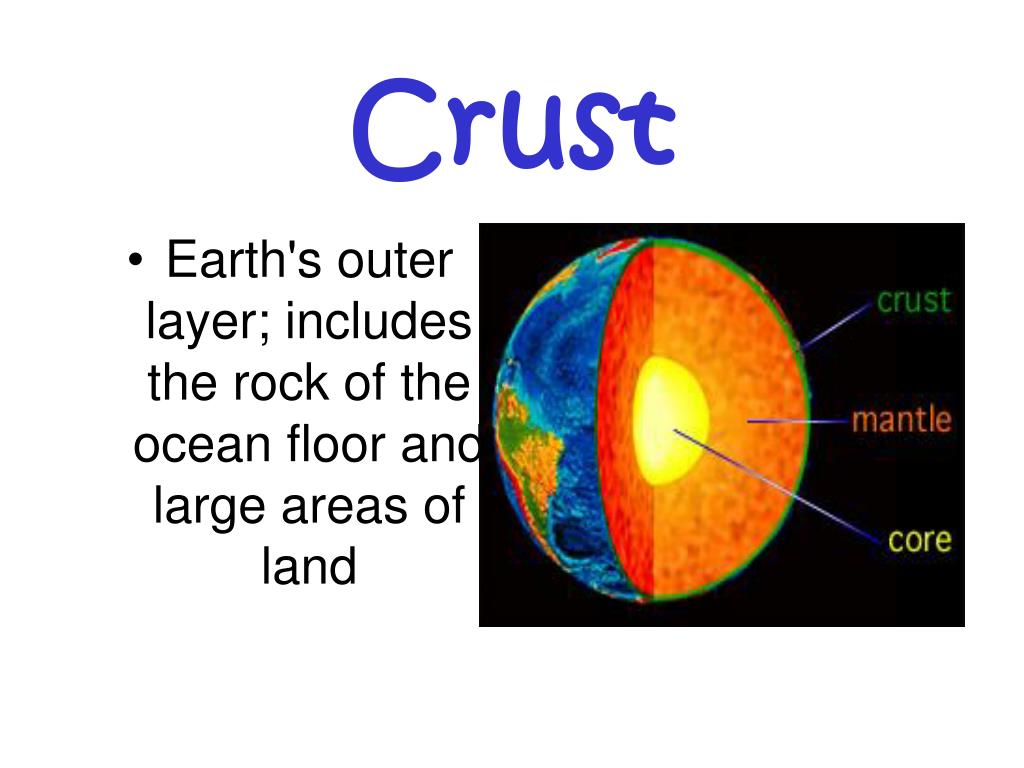 Crust
Crust
Pop culture check: Remember the movie The Core (2003)? It’s hilariously inaccurate (no, you can’t drill to the center with a laser), but it gets one thing right: the crust is our fragile outer shell. For a more accurate—and beautifully animated—take, watch the BBC’s Earth: The Power of the Planet. It’s basically a nature documentary for geology nerds.